
One Cell Thick
The visit was not supposed to exist. A follow-up fell off the schedule that morning, and an acute complaint dropped into the hole it left: leg pain, new, after a day of yard work.
He came in with his wife, and his wife came in with a walking boot of her own — her leg newly post-surgical, her attention doing the work his memory has been quietly setting down. They had a story ready. He overdid it in the yard. Something pulled. They were prepared to hear about strains and rest and ice, and so, almost, was I.
Almost. His medication list carried a blood thinner, and the blood thinner carried a question. I practice in rural North Carolina, where vascular disease is a neighbor, and the question would not sit down. I put my hands on his leg. It was cool. I went looking for pulses and found none.
Two minutes. That is how long it took for a pulled muscle to become a limb losing its blood supply — for the diagnosis, the treatment plan, and the shape of their week to take a sharp left they never saw signaled.
What I remember most is not the finding. It is the pause before I said it out loud. I looked at the boot on her leg. I looked at the way she carried his history for him, the way two people with two good legs between them had arranged themselves into one working system. What I knew was true and urgent, and it was also about to become one more thing they carried. The information could not be withheld. It could be paced. I readied myself to stay in the room while it landed.
No institution performed that conversion. No agency, no health system, no headline reached into that room and turned a strain into an emergency, or an emergency into something two frightened people could hold. It was a conversation, one cell thick.
Here is a fact I keep returning to: no tissue in the body is fed by an artery passing by. The aorta is a magnificent conduit — a garden hose of oxygenated blood under pressure — and it delivers almost nothing itself. Delivery, the actual work of circulation, happens in one place: across the capillary wall, a membrane one endothelial cell thick. Everything above it is transport. Everything that matters crosses at the interface.
It is a hard season to be attached to the institutions of medicine, and the hardness is not abstract. Elected officials are signing orders that attempt to redraw the practice of medicine from a desk — attempt, because so far the courts keep holding, as they have held against overreach arriving from more than one direction. The circulation, it turns out, keeps valves against backflow. Official reports arrive with titles that cast clinicians as predators — and inside them, data bent toward the title: studies misread, numbers mislabeled, conclusions their own sources do not support. I have read some of them closely. The numbers do not hold. The documents take aim at corners and cornerstones of medicine alike. Suspicion does not stay in corners. You do not need a position on any underlying question of care to hear what such documents say to the people doing the work: you are suspect.
The surveys tell the longer story: trust in the medical system has fallen sharply over half a decade.¹ Yet survey after survey holds a stubborn asymmetry — many of the people who have lost faith in the system still trust their own clinician.² I do not offer that as comfort. I offer it as anatomy. The system is the great vessel. The visit is the capillary. Trust, like oxygen, is carried in bulk and transferred only at the interface.
If that is true, then a clinician in a loud year holds two questions, and they are not rivals. The first is what is happening to the great vessels — and it deserves honest attention, the way central pressure deserves attention at any bedside. No one manages perfusion by refusing to look at the blood pressure; what happens above the interface sets the conditions of the bed we tend. The second is where does my influence concentrate now — and the answer, for most of us on most days, is at the wall. Watch the one. Work the other. And the wall, it turns out, governs more than it believes.
Capillary beds do not petition the heart for flow. Working tissue summons its own supply: local signals — the exhaust of effort itself — dilate the vessels that feed the work, and they do this across a wide range of central pressures. Physiologists call it autoregulation. At rest, much of the capillary bed runs at a trickle, capacity that reads as absence until demand calls it up. The catch in that exam room was not vigilance handed down from anywhere. It was demand summoning supply: a question on a medication list dilating into a hand on a leg. The clue arrived by conduit — written upstream by a clinician I have never met, carried to me through the record — and the great vessels brought the blood to the bed. Only the bed could move it across.
There is a physics to what crosses, and it is not a physics of force. Starling described exchange as a negotiation of pressures: what leaves the vessel depends on what pushes outward and what pulls back, on the state of both sides of the membrane. Delivery that outpaces uptake does not nourish. It floods. The fluid lands between the cells, absorbed by no one, and the swelling itself widens the distance everything afterward must cross. Edema is generosity without titration.
I thought of their load as pressure on the far side of the membrane. The news had to move; the only variable was rate. So it moved the way anything survivable moves across a living wall — in gradients, with time to be taken up, with someone monitoring the far side. Pacing is not withholding. It is the difference between perfusion and flooding. And exchange runs both ways: their fear came back across the same membrane, and receiving that return flow is part of the transaction. A broadcast cannot do this. A portal message cannot do this. Bidirectionality is what makes it exchange and not announcement.
Circulation has one more habit worth borrowing. Deprive a tissue slowly and it builds its own detour. Around a gradual narrowing, small pre-existing connections enlarge: the pressure difference across the blockage redirects flow through them, and the shear of that new flow is itself the growth signal.³ The detour is not drawn by any central planner. It is built by flow looking for a way through. It is the sudden occlusion that kills — his leg had no warning and therefore no workaround, which is why it was an emergency. Slow scarcity teaches rerouting. The relationship layer of medicine has been laying collaterals for years: the pharmacist who calls instead of faxing, the nurse who knows which patient will not say the important thing until the second question, the colleague reached by the back channel when the front one narrows. None of it is on an org chart. All of it is perfusion.
None of this makes the layer invincible, and I will not pretend otherwise. Autoregulation has a floor. Below a certain pressure, no local governance saves the tissue. The capillary cannot secede from the circulation, and I do not know where the floor is.
But here is the part I keep for myself, for the days when the noise gets in. Panic is vasoconstriction. It is the body's oldest centralization: under threat, clamp the periphery, guard the core. I can feel my own version of it — the shortened answer, the cooled attention, the day's alarm pulling blood inward toward self-protection. The threatened clinician runs the same reflex as the threatened system, in miniature.
The practiced stance — and it is a practice, not a temperament — is to stay dilated at the exchange surface. To keep the bed open while everything upstream is tightening.
In the room, that looked like nothing. Warm hands on a cool leg. A pause before hard news. Staying while it landed. The rest of their story is theirs.
One cell thick, and holding.
Details and timing have been altered to protect privacy.
References
Perlis RH, Ognyanova K, Uslu A, et al. Trust in physicians and hospitals during the COVID-19 pandemic in a 50-state survey of US adults. JAMA Network Open. 2024;7(7):e2424984.
NORC at the University of Chicago & ABIM Foundation. Surveys of Trust in the U.S. Health Care System. May 2021. norc.org — with corroborating 2026 data: NORC & California Health Care Foundation, Trust and Distrust in California's Health Care System. chcf.org
Schaper W. Collateral circulation: past and present. Basic Research in Cardiology. 2009;104(1):5–21.
The Valley Between Us
There is a curve many have never heard of that explains something all of us have felt.
It's called the uncanny valley. And it doesn't just describe why AI-generated faces make us recoil — it describes something that has been happening in clinical spaces for decades.
This essay is about what the nervous system knows before the mind can name it. About the near enemy — the quality that wears the shape of a virtue without its source. And what it means that patients have always been able to feel the gap between the performance of care and the practice of it.
What a triumph it is that we have a physiological litmus test for authenticity that cannot be trained away, optimized around, or resolved in a strategic plan.
It's also about AI — not as threat, but as mirror. What it reveals about the valley we were already living in. And the distinction that matters most for anyone deciding where AI sits in the architecture of care.
There is a curve many people have never heard of that explains something we have all felt before.
In 1970, Japanese roboticist Masahiro Mori charted what happens to human affinity as a figure becomes increasingly lifelike.[1] The line rises steadily — a toy robot, an industrial arm, a humanoid shape — and then, at a particular threshold of near-humanness, it plummets. Not declines. Plummets. Into a basin Mori called bukimi no tani — the uncanny valley. The figure has crossed some invisible line from recognizably other into almost-us, and something in the perceiver recoils. The more convincing the likeness, the deeper the drop.
I learned of this curve from my husband.
I had been invited to join a professional cohort and needed a headshot. I did not have one. I did not have time to arrange one. What I had was an AI headshot generator and the particular brand of optimism that arrives when a deadline is close and options are limited. The images came back looking almost exactly like me — the bone structure, the coloring, something in the set of the eyes — and yet. My husband looked at the screen, and took a sizable step backward. Not a metaphorical step. An actual retreat from the images of my almost-face. I might as well have handed him a tarantula.
Naturally, I kept showing them to him.
There is something in his recoil I have been turning over ever since. Not the strangeness of the images — they were strange, but strangeness alone doesn’t produce that response. What produced the response was the nearness. The images were close enough to my face to invoke recognition, and wrong enough in some unnamable register to betray it. The form was present. Something essential was not. And his nervous system — the part that has spent years learning the precise frequency of my particular humanness — knew immediately, involuntarily, and with a conviction no amount of explanation could have produced faster.
The valley is not triggered by strangeness. It is triggered by nearness. By the almost-right face, the almost-warm gesture, the words that land in the correct order but carry no weight. Something in us detects the gap between the form of humanness and its animating source — and we do not simply notice. We recoil.
This is not a flaw in our wiring. This is our wiring doing exactly what it was built to do.
And in no place is that more true than in the spaces where humans are most creaturely and most exposed. Which is to say: in medicine.
In 2015, physician Caleb Gardner recognized this phenomenon in The Lancet — watching a colleague deliver a difficult diagnosis using flawless clinical language, while something in the room went wrong in a way no checklist could measure.[2] He called it medicine’s uncanny valley: the problem of standardizing empathy, of teaching the form of compassion without cultivating its source.
What Gardner was witnessing has a name in a different tradition entirely. In Buddhist psychology, a near enemy is a quality so close in form to a virtue that it can be mistaken for it — even by the person performing it. Brené Brown carried this concept into contemporary use when she named sympathy as the near enemy of empathy.[3] Sympathy gestures in the right direction. It uses the right language. It can be delivered with genuine warmth and genuine intention. But it maintains distance rather than entering — and the person receiving it feels the difference before they can name it. This is the uncanny valley by another route. The form without the source. The almost-right face.
And here is what makes the near enemy so insidious in clinical and leadership spaces: it is what the system selects for. When genuine presence is challenged by structure — when the clinician is carrying three other rooms in their nervous system, when the documentation burden splits attention at the exact moment connection is required, when the productivity standard has calculated to the minute how long this encounter is permitted to take — the near enemy is set up to thrive. The system wants to reward the real thing. But most of the structures in place reward the measurable approximation of it. And over time, we are vulnerable to being shaped by incentives, by evaluation criteria, by sheer exhaustion, to produce the near thing and call it the real thing.
The valley didn’t begin with AI. It began when good intentions produced structures that reward the performance of care over the practice of it.
The body in the exam room knows. Not intellectually. Immediately, somatically, in the way a nervous system in a vulnerable state becomes hyperattuned to signals of safety and threat. The patient cannot always name what is wrong. They may say the clinician seemed rushed, or distracted, or like they were just going through the motions. But what they are detecting is the gap — the same gap Mori charted in 1970, the same drop Gardner witnessed in that hospital room. The form of care, without its source.
We have been living in the valley for years. We just didn’t have a name for it.
And then AI arrived. And suddenly we could see it.
There is a particular kind of clarity that comes from encountering a mechanism made visible. When an AI system enters the clinical encounter — answering questions, mirroring empathic language, producing the correct response at the correct moment — the uncanny valley response fires with a precision that cuts through every rationalization we have constructed about efficiency and optimization and the necessities of modern healthcare. We feel the drop immediately, completely, with a conviction we cannot argue ourselves out of.
Here is where it gets more honest, and more complicated.
Not all AI in the clinical space triggers the valley. The AI scribe sitting outside the frame of the encounter — capturing, transcribing, relieving the clinician of the documentation burden that has been splitting attention and presence for decades — does something different. It gives the clinician back the room. It removes the cognitive weight that was forcing the brain elsewhere, and suddenly the eyes can stay where they belong: on the person in the room. The technology, in this configuration, is not approximating presence. It is restoring the conditions for it.
Same technology. Completely different valence. And our nervous systems know the difference.
This is the distinction that matters for anyone leading in healthcare right now. The question is not whether AI belongs in clinical spaces. The question is where it sits in the architecture of the encounter. When AI functions as infrastructure — invisible, load-bearing, in the background — it can serve presence. When AI becomes the face of care, the voice, the entity a frightened patient is asked to trust with their fear — the valley opens.
The uncanny valley response tells you which one you are in. If you learn to listen to it.
Some will argue that the valley has a far side — that sufficient humanness restores affinity, and that AI will eventually cross that threshold. Perhaps. But clinical spaces do not hold still for that argument. The nervous system of a person in genuine extremis — frightened, exposed, holding something they cannot hold alone — is not calibrated to ordinary interaction. It is calibrated to stakes. And what it is listening for, in those moments, has never been the most sophisticated approximation of presence available. It has been presence. The threshold shifts with the weight of the moment, in ways that may not be reduced to processing power.
What a triumph it is that we have this.
Not a policy. Not a framework. Not a committee recommendation or a quality improvement initiative. A physiological litmus test for authenticity — ancient, automatic, and incorruptible. Woven into the nervous system long before we had language for presence or empathy or the ethics of care. The uncanny valley response cannot be trained away. It cannot be optimized around. It does not appear on a satisfaction survey or resolve itself in a strategic plan. It lives in the body — in the step backward my husband took without deciding to, in the patient who cannot articulate why they don’t feel heard, in the room that goes quiet in a particular way when something essential is missing.
And it becomes more sensitive, not less, in the conditions that matter most. In the rooms where someone is celebrating, bringing life into the world, terrified, or holding the tension of finding out if their life is about to change. The stakes raise the threshold. The vulnerability sharpens the instrument. What passes in ordinary interaction does not pass there.
We did not design this. We inherited it. And it is doing exactly the right job at exactly the right moment in the history of medicine.
The harder news is this: we cannot always use it on ourselves.
The uncanny valley is a receiving instrument. It tells us when something is missing in what we are being given. It does not, by itself, tell us when we are the ones generating the gap. The near enemy is convincing to the performer. Scripted presence feels like presence when you are tired enough, busy enough, have done it enough times that the form has become automatic. Sympathy feels like empathy from the inside. The near enemy lives in the space between what we intend and what we transmit — and we may not feel the distance we are keeping.
I have felt this myself. Not always in the giving, but in the receiving. When a patient tries to thank me — when they reach across the clinical distance with something genuine, something that cost them effort to articulate in a place where they are already spending more than they have — there is sometimes a performance that arrives before I can stop it. The deflection. The redirect. The “oh, it’s just what we do.” It is not dishonest. It is not unkind. But it is a near enemy — a managed distance dressed as humility.
What I have come to understand is what is lost in that moment. The patient is not simply expressing gratitude. They are offering a gift. A real one. They are trying, briefly, to equalize a relationship that has been asymmetrical from the moment they walked through the door — to say I see you, what you did mattered, you were present with me and I want you to know. The gracious deflection does not protect them from an awkward moment. It sends the gift back unopened. It takes their something and makes it nothing. They leave having tried to see you — and having been, however kindly, unseen in return.
The near enemy runs in both directions. And the valley, it turns out, is not only something we fall into. Sometimes we build it ourselves, one gracious deflection at a time.
For leaders, the near enemy compounds. Consider the meeting where someone is listened to — where eye contact is held, where there is no interruption, where a follow-up question arrives at the right moment. Every behavioral marker of presence is there. And yet something in the room knows. The person speaking is not being heard. They are being processed. The listener arrived with a position already formed, a conclusion already drawn, and what looks like listening is the management of the interval before speaking. The person speaking feels the distance before they can name it. The door is open. The mind is closed. The near enemy of listening is waiting. Psychological safety that is conflict avoidance. Engagement that is managing rather than meeting. A leader can hit every behavioral marker of a high-trust culture and still have a team that feels, without being able to articulate it, that the door is open but the room is not. The near enemy of vulnerability is performing. And it looks, from the outside, almost exactly like the real thing.
The valley exists to protect a distinction that medicine has always known and is only now being forced to name. The patient in the gown is not asking to be met by the most sophisticated available approximation of care. They are asking to be met.
The uncanny valley response arrives before language does. That is its value and its difficulty. By the time we have words for what went wrong in a room, the moment has already passed and the gap has already widened. The practice — if there is one — is developing enough somatic literacy to catch it earlier. To feel the drop in real time. In the decision about where AI sits in the encounter. In the meeting where listening reveals itself as waiting. In the moment a patient reaches toward you and something in you retreats before you have decided to.
The curve Mori drew was never about robots. It was about the thing the nervous system has always known — that form without source is not the same as presence, that near is not the same as here, that something felt in the body before it can be named in language is still, and perhaps especially, true.
The body has always known. The nervous system has always been keeping score. The only question is whether we are in the practice of listening.
References
1. Mori, M. (1970/2012). The uncanny valley [From the field]. Translated by K. F. MacDorman & N. Kageki. IEEE Robotics & Automation Magazine, 19(2), 98–100. https://doi.org/10.1109/MRA.2012.2192811 (Original work published in Energy, 7(4), 33–35, 1970.)
2. Gardner, C. (2015). Medicine’s uncanny valley: The problem of standardising empathy. The Lancet, 386(9998), 1032–1033. https://doi.org/10.1016/S0140-6736(15)00161-0
3. Brown, B. (2021). Atlas of the heart: Mapping meaningful connection and the language of human experience. Random House.
Controlled Burn
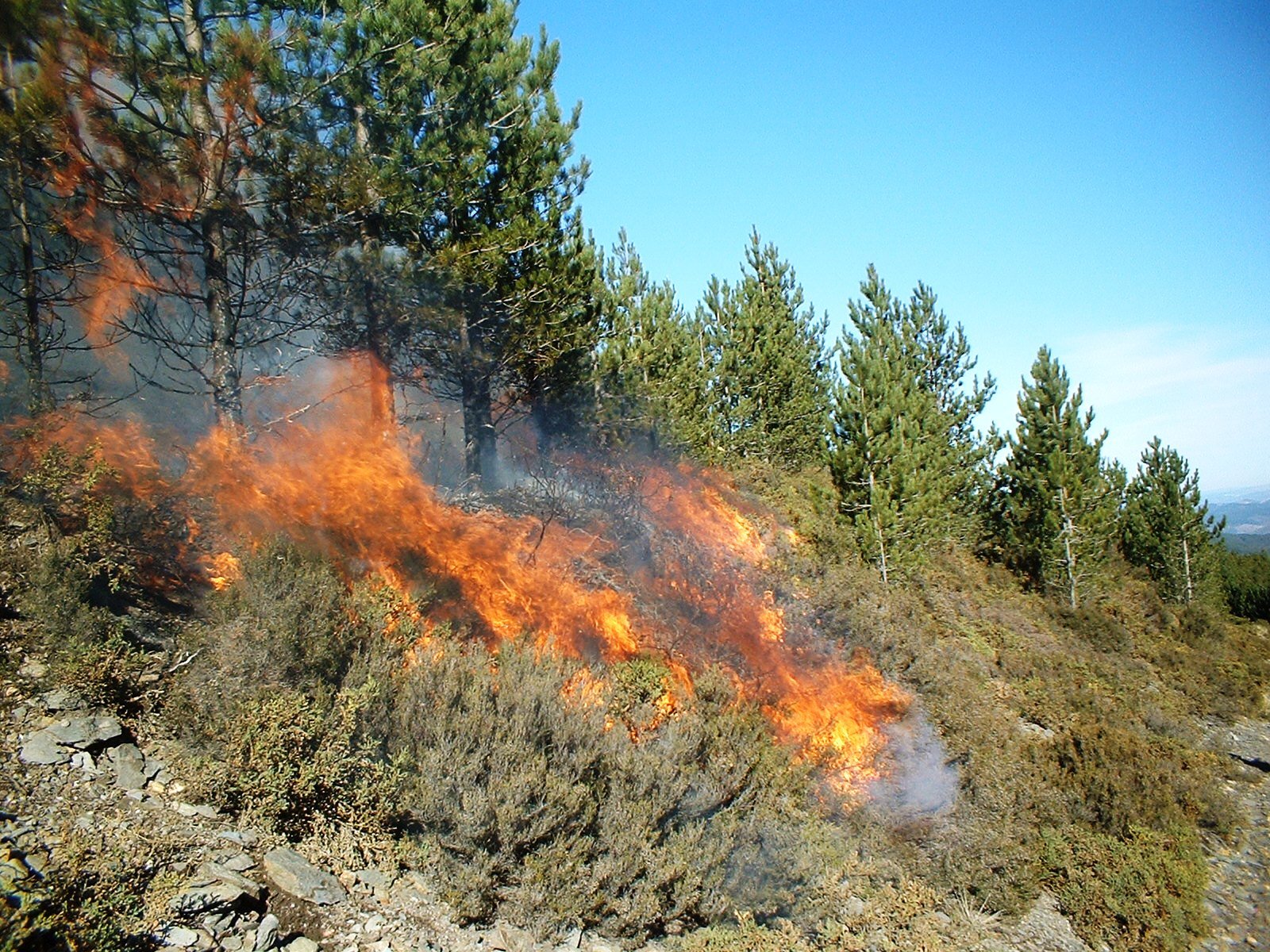
A sign on the highway: EXPECT DELAYS. CONTROLLED BURN TODAY.
I almost resented it — I had somewhere to be. Then it landed: the delay wasn't the interruption of the work. The delay was the work.
Healthy forests depend on fire. Small, deliberate burns clear what would otherwise build into catastrophe. Refuse every necessary hard thing for long enough and you don't get safety — you get the wildfire.
We even named it after the thing. We call it burnout, as if it arrived from outside, as if it were weather. It isn't weather. It's fuel load.
This latest essay is about controlled burns — in a forest, and in practice. Fire ecology, Indigenous good fire, and why the discipline of choosing the hard thing now is so hard to fund when the reward doesn't arrive this quarter.
On fuel load, good fire, and the discipline of the necessary burn — in a forest and in practice.
“EXPECT DELAYS. CONTROLLED BURN TODAY.”
The sign stood on the highway shoulder, orange and bureaucratic, and somewhere past the tree line a thread of smoke was unspooling into a flat sky. My first response was the ordinary one. I checked the clock. I calculated the cost.
The second response arrived slower: that the delay was not the interruption of the work. The delay was the work.
None of this was new to me. I learned the science and the importance of fire in an ecology class half a life ago — the fuel load, the serotinous cone, the ash that feeds — and could have recited it. But knowing a thing and being found by it are different events, and the sign found me. I noticed it then because some part of me had already done the accounting, and knew the forest floor had gotten too deep.
A forest does not burn because something has gone wrong. In most of the places it occurs, fire is not the forest’s catastrophe — it is the forest’s maintenance. For much of the last century we believed otherwise. American policy was suppression, total and reflexive; in 1935 the Forest Service made it doctrine that every fire should be controlled by ten o’clock the morning after it was spotted.[1] We were good at it. We put the fires out. And in putting out the small ones, we taught the forests to hold their fuel — the fallen needles, the dead limbs, the dense understory that a low fire would have cleared every few years. The fuel waited. It always waits. And the fire that finally comes to a forest that has not burned in eighty years is not a maintenance fire. It climbs the ladder of underbrush into the canopy and takes everything.
This was the first thing the sign surfaced, idling on the highway. The small burns are not the danger. The refusal of the small burns is the danger. What we will not let burn in measure, we eventually lose in full.
There is an older layer under that, and it took me longer to see it. The frequent, low fire that once kept these forests honest was not, for most of the time there have been forests and people in them, an accident of lightning. It was a practice.
Across this continent and others, for thousands of years, people burned deliberately — in patches, on a schedule the land taught them, at a heat low enough to clear the understory and spare the canopy. In California they burned to keep the oak woodland open and the acorn crop heavy, and so the hazel and the redbud would throw the straight young shoots a basket needs.[2] In Australia thepractice was so systematic that an archaeologist, centuries later, would have to invent a name for it — fire-stick farming — for the mosaic of burned and unburned country that shaped a continent.[3] The healthy forest we mistook for wilderness was not wilderness in the sense we mean. It was tended. It was, in the most literal way, a garden kept with fire.
It should be said plainly that this was not one practice but thousands, each specific to a people and a place, carried in language and ceremony and the body’s memory of when the grass was dry enough and when it was not. And the suppression I described was not only a policy error. It was a law. Colonial and then state authority made the burning a crime, drove the practitioners off the land, and called the result, a century later, wilderness — then was astonished when the wilderness, dense with all the fuel no one was allowed to clear, began to explode.[4]
What is being recovered now goes by the name good fire. The descendants of the people who were forbidden to burn are burning again, sometimes alongside the agencies that once arrested them for it, teaching a new generation to read a hillside and put fire on it at the right hour. And here is the part I keep turning over, because it complicates the tidy lesson I want to draw: you cannot extract the technique from the relationship that made it work. A controlled burn, in the agency’s sense, is a tool — a thing you schedule and contain. Good fire, in the older sense, is a relationship — a thing you owe, tend, and answer to, across a lifetime and past it. The danger now is that we take the first and leave the second. That we learn to light the fire without learning what the fire is for, or to whom we are accountable when we light it.
Consider, then, what the fire does to what it takes. A standing tree, a mat of dead litter, a season’s fallen growth — these are nutrients locked in a form nothing can use quickly. Decomposition would free them, but slowly, across decades. Fire is the fast version. It reduces the structure to its mineral floor — phosphorus, potassium, calcium — and hands it back to the soil in a single afternoon as ash.[5] The complexity is undone. The basic compounds are returned.
Fire is honest in a way that comforts me: it takes as it gives. Much of the nitrogen goes up with the smoke, and the forest must rebuild it slowly.[5] Nothing here is free. The ash that feeds the next generation is paid for by the one that burned. And some of what burns does not leave at all. Char remains — black, nearly indestructible — and folds into the soil, where it holds water and shelters the unseen microbial life for a very long time. In the Amazon, dark earths that people made by working charcoal into thin, sour ground a thousand years ago are fertile still.[6] The char was not the end of those fires. It was the longest-lasting thing they made.
Then there are the seeds.
The lodgepole pine seals some of its cones with resin and will not open them forsun or wind or time. The cones wait, sometimes for decades, for one specific signal: the temperature of fire, somewhere between forty-five and sixty degrees Celsius, which in nature almost nothing but a flame can supply.[7] Heat melts the resin, the cone opens, and the seed falls onto ground the same fire has just cleared and fed. The tree has arranged its entire future around the event most living things flee. It does not hedge. It bets everything on the burn.
And it is not only heat. The smoke itself carries instruction. In the residue of burned plants there are compounds — they were named karrikins, after karrik, a word for smoke from the Noongar people of southwestern Australia — that certain seeds can read.[8] Buried and dormant in the soil for years, they wake to the chemical signature of combustion. Not to warmth. Not to rain. To the particular evidence that something nearby has burned, and that the ground is therefore briefly, violently open.
Closer to where I live, the longleaf pine takes a stranger discipline still. Its seedlings spend years — sometimes a decade or more — disguised as grass, a low tuft with no trunk, pouring everything down into a taproot while fire passes harmlessly over the growing bud. Only when the reserve runs deep enough does it bolt, fast, for the light. It has learned to look like nothing in a place that burns, and to grow only when it is ready to grow all at once. The forests it builds were once among the most species-rich in North America — more than fifty kinds of plant in a single square meter — and they collapsed, from something like ninety million acres to roughly three, not only under the axe but under the long quiet of fire kept away.[9]
Here is the distinction the highway sign was making, the one I keep returning to.
A controlled burn and a wildfire are the same chemistry. The difference is discipline, timing, and consent. One is chosen, bounded, and tended — someone decided when, and watched the edges. The other is what you get when no one chose for too long.
We carry fuel too. The resentment we will not name. The role we have outgrown and keep performing. The grief we did not have an afternoon to feel and so filed away for later — and there is always more later, and the pile does not decompose on its own. A life, like a forest, can go a long time looking healthy while the understory thickens. Then a season comes that we did not choose, and it takes more than a controlled burn ever would have.
I work in a system that is very good at suppression. We do not build in the small fires — the time to grieve a death, to end a thing that is finished, to let an old way of working become ash so a better one has room. The logic we inherited prizes throughput and treats every delay as a defect. And then we are surprised by the wildfire, and we have even named it after the thing. We call it burnout, as if it arrived from outside, as if it were weather. It is not weather. It is fuel load.
It is the bill for every small fire we were too busy to light.There is a version of this that is the hardest of all to make convincing, because its whole problem is that it cannot be photographed. The medicine I trained in is built, brilliantly, for the wildfire — the heart attack, the sepsis, the cancer found late and fought hard. That work is heroic and visible and, not incidentally, the part we know how to bill. The other medicine, the kind I am supposed to be building, is the small fire set on purpose: the pressure managed before the stroke, the disease caught while it is still the size of a thing you can clear. It asks the patient for an inconvenience now against a catastrophe later. It is, in every sense, the sign on the highway. Expect delays.
And it carries the particular curse of all prevention, which is that its successes are invisible. A controlled burn that prevents a wildfire produces no footage; the fire that did not happen cannot be counted, cannot be thanked, cannot be entered into the quarterly report. We are very good, as a culture, at rewarding the people who fight the fire that reached the canopy, and very bad at noticing the ones who kept it on the ground. The forest thinks in centuries. The budget thinks in quarters. Almost everything difficult about this work lives in the gap between those two clocks.
Value-Based care is my profession’s attempt to close that gap — to change what we pay for so the small fires become worth the time, to reward the long game over the short gain, to fund the burn that keeps the catastrophe from ever reaching the canopy. It is, in the most literal institutional sense, an agreement to accept the delay because the delay is the work. I spend my working life inside that attempt, and I believe in it.
What I’ve learned to watch for is the failure mode, because it is the same one that hollows out good fire: a living relationship reduced to a technique you schedule and measure, prevention shrunk to a metric, a metric gamed. But the harder truth is structural. Most of us are still paid both ways at once — Value-Based agreements that reward the long game and productivity models that reward the short one, on the same schedule, in the same building. In that straddle the small fire often does not pay yet, sometimes not for years, and funding it means spending real money now against a return no one can book this quarter. It is easy to say the burn is worth it. It is much harder to ask people to carry two contradictory jobs on one budget and burn anyway, in the window when the fuel is still building and the reward has not arrived.
Rewarding the long game is not the same as funding it, and funding it is not the same as tending it. The model is right; living inside the years before it fully arrives is the discipline no policy can install for us. And there is a deeper discipline still, the one the suppression reflex can never learn — that not every fire is meant to be fought. A medicine that treats every death as a defect, that extends every life at any cost because stopping feels like losing, has only moved its suppression downstream. The hardest, most controlled burn of all is knowing which fire is the necessary one, and letting it burn.But the clean version won’t hold, because fire resists it too. A controlled burn is still fire. It can escape; crews lose them; the line you drew is not always the line it honors. To choose the hard thing on purpose is not to make it safe. It is only to make it yours — to take the loss in a form and at a time you can stand inside of, instead of waiting for the form and time that will be chosen for you.
So I have started asking the fire’s questions, which are not gentle. What have I let accumulate because the small burn felt like too much delay? What complexity in me has become fuel rather than structure — and could be handed back, reduced to something simpler, so that whatever comes next has air and minerals to start from?
What in me is a sealed cone, holding a seed that will not open for anything but a heat I keep avoiding?
This newsletter is named for the understory — the crowded, low, living layer beneath the canopy, where the seedlings are and where the fuel is, the same place. It is the layer that must, every so often, burn. Not as failure. As maintenance. As the oldest form of care a forest knows.
The smoke was still rising over the ridge when traffic began to move. I drove on slower than I’d planned, which was, I think, the entire point. Expect delays.
Something necessary is on fire today, on purpose, and someone is standing at the edge of it, watching it do its work.
References
1. Forest History Society, “U.S. Forest Service Fire Suppression” (on the 1935 “10 a.m. policy”).
2. M. Kat Anderson, Tending the Wild: Native American Knowledge and the Management of California’s Natural Resources (University of California Press, 2005).
3. Rhys Jones, “Fire-Stick Farming,” Australian Natural History 16, no. 7 (1969):224–228.
4. Christopher Adlam et al., “Keepers of the Flame: Supporting the Revitalization of Indigenous Cultural Burning,” Society & Natural Resources 35, no. 5 (2022):575–590. https://doi.org/10.1080/08941920.2021.2006385
5. Alex Amerh Agbeshie et al., “A review of the effects of forest fire on soil properties,” Journal of Forestry Research 33, no. 5 (2022): 1419–1441. https://doi.org/10.1007/s11676-022-01475-4
6. Umberto Lombardo et al., “Evidence confirms an anthropic origin of Amazonian Dark Earths,” Nature Communications 13 (2022): 3444. https://doi.org/10.1038/s41467-022-31064-2
7. David A. Perry & James E. Lotan, “Opening temperatures in serotinous cones of lodgepole pine,” USDA Forest Service Research Note INT-228 (1977).
8. Gavin R. Flematti et al., “A Compound from Smoke That Promotes Seed Germination,” Science 305, no. 5686 (2004): 977.https://doi.org/10.1126/science.1099944
9. David H. Van Lear et al., “History and restoration of the longleaf pine–grassland ecosystem,” Forest Ecology and Management 211, nos. 1–2 (2005): 150–165. https://doi.org/10.1016/j.foreco.2005.02.014
Taking a Fix
Drift compounds invisibly. So does the cost of not checking it.
Part one was about noticing the drift — the dignity of practicing under old light, and forgiving yourself when the sky had already moved. This one is about the harder half: actually correcting it. Because knowing you might be off course doesn't fix anything on its own.
Which sounds straightforward. It isn't.
This second essay is about what actually gets in the way — ego, burnout, sunk cost, and the particular kind of courage it takes to be someone else's sighting check when they may not want the correction. It's also about what happens to drift when the work accelerates and the checking doesn't. That gap is not theoretical right now. It's compounding.
If you're arriving here without Part 1, you don't need it. The water is deep enough to enter from here.
Taking a Fix is below.
Part two of a two-part essay on Polaris, sighting, and the discipline of checking the drift.
Last time: old light is everywhere — in the sky, in the evidence base, in the clinician asked to be the steady point. And the first discipline is simply noticing the drift: accepting you're always working from a signal that left before now, and forgiving yourself for the times you couldn't have known sooner. That was the gentler half. This time: the harder one — actually correcting the drift, and why that's harder than knowing it's there.
The paradox — that staying on course means constantly admitting you might be off it — is not navigated by simply knowing better.
Sighting costs something every single time — the broken stroke, the small discomfort of admitting mid-race that the line might already be off. What it actually requires is closer to humility than vigilance: the assumption, built in before the swim starts, that drift is normal and checking is the practice, not a failure of execution.
In a clinical or leadership context, that same assumption rests on psychological safety — Amy Edmondson's term for a team's shared belief that speaking up won't cost you belonging in the room. Her research found that hospital units with higher psychological safety didn't make fewer errors; they reported more of them, because staff felt safe enough to say so out loud [1]. Without that safety, the small, visible cost of checking starts to feel like the larger threat, even though the invisible cost of not checking is the one that actually compounds.
What gets in the way is not usually incompetence. Ego can turn the small admission — I might be off course — into a bigger one than it feels like it should be, especially for someone whose identity has been built on being the person others check with, not the person who checks. Burnout can remove the capacity for it at precisely the moment it's most needed — the same fatigue that pulls a stroke off-line also leads an exhausted clinician or overextended leader to stop asking the one question that would catch the drift, right when the workload is making the drift most likely. And sunk cost does its own quiet work. Once real effort has gone into a heading — a training plan, a clinical approach, a department's way of doing things — admitting drift can mean admitting some of that effort missed the mark.
None of this works as a solo discipline for long. A single navigator checking their own drift is still one instrument short of reliable — which is why ships carried more than one officer, and why medicine builds the equivalent into its institutions rather than leaving it to individual vigilance. Tumor boards, M&M review, decision-support alerts — these are a health system's version of taking a fix — the deliberate cross-check against an outside reference point. They exist so that drift gets caught by the structure, not just by whichever clinician happens to notice their own compass disagreeing with the chart. Where does that leave a leader, in this metaphor? Maybe less in modeling good personal recalibration — useful as that is — and more in building the fix-taking into the system itself, so it doesn't depend on any one person remembering to look up.
Sometimes the fix isn't self-administered, and it isn't built into a dashboard. Sometimes it's a person, volunteering to stand in front of a room and deliver a correction the room had been avoiding. I watched one do exactly that recently — introduced with the kind of reluctant preamble that signals difficult news before a word of it has been spoken, to a room that already knew, from a year of increasingly difficult meetings, that the legislation had changed the math. I was sitting to the side at the front, angled to watch the presenter and the room as the charts went up: the negative trends, the projections, the numbers that don't resolve if the pace doesn't change.
Whatever the opposite of collective effervescence is, it settled over the room.
And yet what that leader did was not pressure dressed up as candor. It was not asking people already swimming at what feels like top capacity to find a faster stroke. What made it land as a sight check instead of a demand was that it was true, specific, and offered alongside the clinicians in the room rather than handed down to them. It takes a particular kind of resolve to be someone else's sighting check, knowing they may not want the correction.
Which raises the question from the other side: who or what is doing that for you right now, and what do you feel when a sighting check is offered?
What distinguishes a wayfinder from someone simply drifting on old signal is whether the inheritance is maintained. Polynesian and Micronesian navigators crossed open ocean for thousands of years with no human-made technology at all — star paths, swells, the behavior of birds — knowledge passed master to apprentice across years of training, taught deliberately and checked continuously against what was actually observed [2]. A navigator could sense an island before it ever came into view, crouched low in the hull, reading it in the way the swells moved differently beneath the boat — knowing arrives through the body before it arrives as a thought. The same is true of clinical instinct layered upon trained tradition that develops over hundreds of experiences: a maintained tradition, recalibrated against the present, and imperfect from years where sight corrections may have been missed.
Which is why master wayfinders never trusted a single instrument. They took a fix — cross-referencing the old-light star, the drifting compass, the compounding dead-reckoning estimate, and whatever landmark was available, against each other, to triangulate a position they could act on, knowing they'd need to fix again soon. That's a fair description of good clinical judgment, and good leadership: not locating the one true signal, but knowing which instrument is currently doing the most work, how old or drifting or compounding its information is, and deliberately checking it against something built differently before committing to the position.
One more variable matters, especially right now: speed itself. A vessel moving faster covers more distance in the same interval between fixes, which means the same checking cadence leaves more room for undetected drift, not less. Athletes already know this in their bodies: carbon-plated shoes and tech suits make a body faster without making it a better navigator, so a faster swimmer who doesn't also sight more often simply drifts further before ever noticing. AI is doing the same thing to clinical and professional pace right now — more information, more notes, more output per hour, the whole rhythm of the work accelerating underneath everyone using it. If the checking cadence doesn't scale to match — the second look, the peer consult, the pause to ask whether the line is still right — the drift doesn't shrink because everything got faster. It compounds faster instead.
As your own pace picks up, is your checking cadence keeping pace with it, or is it still set for a slower world?
So perhaps the more useful question to leave you with isn't what's true for you right now. It's which instrument you're navigating by, and how old its light is. And once you know — what else have you checked it against?
References
1. Edmondson, A.C., "Psychological Safety and Learning Behavior in Work Teams," Administrative Science Quarterly. journals.sagepub.com/doi/10.2307/2666999
2. Door of Perception, "Polynesian Wayfinders: The knowledge of the ancestors." doorofperception.com/2016/10/polynesian-wayfinders
Old Light
"There was never a version of celestial navigation that offered real-time truth. There was only old light, trusted enough to act on."
Polaris is old news by the time it reaches you. The star marking true north tonight is showing you a version of itself from centuries ago — drifting, and pulsing, the whole time you steer by it.
Clinicians inherit that paradox. The evidence we practice from is old light too. It asks two questions on two different clocks: Was it true when it left? Yes — it earned the trip through trial, replication, review. Is it still true now?
The hard part isn't choosing one. It's holding both — committing to the light fully while never quite trusting it's still where it was. That double grip is the whole discipline.
This one is about the dignity of practicing under that delay. About what it means to have charted in good faith by a north that has since moved — and to forgive the version of yourself who did. We do better when we know better. The second half of that sentence, the one we rarely say out loud, is: then forgive the practitioner who didn't know yet.
What's the one thing you'd check your bearings against, the next time you can't tell which kind of drift you're in?
Part one of a two-part essay on Polaris, drift, and the instruments we use to navigate, Old Light is below.
Part one of a two-part essay on Polaris, drift, and the instruments we use to navigate.
Polaris is old news by the time it reaches you. Light has a speed limit, so the star marking true north tonight is showing you a version of itself that existed before this moment — sometimes centuries before. There was never a version of celestial navigation that offered real-time truth. There was only old light, trusted enough to act on.
It isn't fixed, either. A slow wobble in Earth's rotation — axial precession — traces a circle across the sky roughly every 26,000 years, which means the identity of "the North Star" has changed before and will change again [1]. Four thousand years ago, the star Egyptian astronomers steered by was Thuban, in the constellation Draco, holding the pole position from roughly 3942 to 1793 BCE [1]. Polaris won't hold the job forever. And it isn't even stable in the meantime: Polaris is a Cepheid variable, a star that physically pulses — expanding and contracting on a rhythm of roughly four days, something close to a heartbeat written in light. It was never fixed. It was old, drifting, and pulsing the entire time, alive in its own strange way — we simply couldn't sample fast enough, across a short enough life, to catch it. And when we finally could, it surprised us: the amplitude of that pulsation had been shrinking for most of the twentieth century, fading toward nothing — then, in the 2000s, it unexpectedly reversed and began to grow again [2]. Even the drift drifts.
Clinicians inherit a version of this same paradox — and the first thing to get right is that it pulls two directions at once.
The oldness is something to trust and something to distrust at the same time — and both are correct. Not in sequence. At once. The light asks two questions that keep different clocks. Was it true when it left? Yes: it passed through trial, replication, review, adoption. It earned the trip. Is it still true now? Unknown — the star may have moved since it shone. You honor what the light was and question what it's become in the same breath, and you steer by it anyway. That isn't indecision. The holding of both is the discipline. Let go of either one and you've stopped navigating.
The evidence base a clinician practices from is, structurally, old light — research findings that ran the same gauntlet before they ever reach a bedside. There's a widely repeated figure in implementation science holding that it takes roughly seventeen years for new research to become standard practice. More recent scrutiny has found the underlying calculation messier than the round number suggests — a composite of different specialties and definitions of "implemented" rather than a clean measurement [3]. Which is its own small parable: even the citation about delay is itself an old, somewhat overconfident signal, repeated past its own nuance. Knowing a number is old isn't the same as knowing how old, or how reliable.
There's a second layer, closer to the precession problem than the light-delay problem. Precession has something no clinician gets: certainty. Astronomers always know it's happening — they can measure the rate, name the year Thuban stopped being the pole star. A clinician doesn't get that confirmation. All they get is the question of whether what they're feeling right now is real.
A clinician trained under one era's standard of care has to ask whether a colleague's pushback is the sky actually shifting, or just a single read that needs more behind it. Whether a new workflow is a genuine correction, or a pendulum mid-swing. And then the harder version, underneath both: is this the discomfort of being wrong, or the discomfort of being early? That's the actual difficulty, and it isn't a failure of vigilance — drift, unlike a star's position, doesn't come with a confirmed timestamp.
Some of it really is slow enough that nobody could reasonably have caught it sooner. They simply discover, one day, that they're being corrected by someone who trained under a different sky. I was accurate, and I missed that the alignment moved — a sentence only ever said afterward. Some of it moves too fast for even careful watching to keep pace. And some of what feels like drift isn't drift at all. Telling these apart from inside the moment is the real skill. It's exactly why no navigator ever trusted a single instrument — why the discipline is always one read checked against something built differently. The sky doesn't drift in total silence, at least: CME, recertification, guideline updates, and peer review exist precisely to surface a shift before a patient pays for the lag.
What's the one thing you'd check it against, the next time you can't tell which kind of drift you're in?
I trained when pain was treated as the fifth vital sign and liberal opioid prescribing was taught as the compassionate standard. Watching that consensus invert wasn't a gentle realignment. It was a hard correction, and it landed on clinicians who'd been doing exactly what they were trained to do.
They weren't reckless. They were accurate to their sky. The standard hadn't formed yet, and you cannot practice from a light that hasn't reached you. We do better when we know better gets quoted like a comfort, but it only holds if you say the second half out loud: forgive the practitioner who didn't know yet. That's the hard one — because it means forgiving the version of yourself who charted in good faith by a north that has since moved. Not excusing the harm. Not pretending the correction wasn't needed. Refusing to convict someone for practicing under the only sky they had. Grace isn't the absence of correction. It's what makes correction survivable.
Meanwhile, patients and institutions tend to want the clinician to function as Polaris itself — the stable, unmoving point everyone else orients by in a crisis. However, the clinician is working from old light at every layer underneath that expectation: labs drawn hours ago, a symptom history relayed through someone else's memory. Even the felt sense of "right now" arrives a beat late — the body registers an event before the mind catches up to having registered it. The clinician asked to be the fixed point is being asked to outrun a delay that's built into perception itself, not only into the chart.
Not every navigation tool looks to the sky, and the earth-based ones fail differently. A magnetic compass isn't reading old light at all; it's reading something real and present, Earth's magnetic field, right now. The field itself isn't fixed. True geographic north and magnetic north diverge by an angle called declination, which varies by location and shifts over time as the magnetic pole drifts — with some regions, like parts of Alaska, seeing declination shift by more than ten degrees in just the past two decades [4]. A navigator who trusts the compass without knowing the local declination ends up confidently, presently, and completely wrong. Consider what this might mean for organizational or clinic-level culture versus the actual evidence base: the local norm — what a department actually rewards, what gets reinforced in the room — is a real, live, strongly felt signal. It is not always the same thing as true north.
What's the declination where you stand, and when did you last check it?
Then there's dead reckoning — no external signal at all, just a last known position projected forward using speed, heading, and elapsed time. It's the closest analogue to seasoned clinical intuition: pattern recognition built from a real starting point and extended, year over year, through accumulated experience. It's often right. However, dead reckoning has one well-documented failure: error compounds invisibly, a small miscalculation stacking on the last one, until a navigator is entirely confident of a position that's been drifting for miles. The correction isn't abandoning the method — dead reckoning is still the backbone of how most navigation actually happens — it's periodically taking a fix: a landmark, a sounding, a star sight, something external, to catch the drift before it compounds further.
I know this one from training, not from a study. Running the tangent through a curve — cutting the shortest geometric line instead of hugging the outside edge — is dead reckoning on foot, run by feel and committed to in advance. Most recreational marathoners run an extra 0.3 to 0.5 miles over 26.2 simply by missing that line — three to five minutes added to the clock before a single mile was ever run slower than it had to be [5]. The fix lives in the water, and there the cost is steeper. Open water has no lane line and nothing to hold a stroke straight, so a body left uncorrected drifts — not from inattention, but from something with an actual name: proprioceptive drift, the brain's own unreliable sense of straight-ahead once the visual reference disappears. Left unsighted, that drift alone can add ten percent or more to a swim's total distance [6]. Sighting — lifting your head every few strokes to find the buoy and correct your line — is taking a fix, just on a faster cadence than any ship ever needed.
Two athletes swim the same race and don't cover the same distance — and the one who drifted never felt it happen. That's the whole trouble with drift: from the inside, it doesn't feel like anything. It feels like swimming straight.
So I'll stop here, at the noticing, before the fix — because they're two different skills, and this half was only ever about the first one. The dignity of steering by old light at all: committing to it fully while never quite trusting it's still true, and forgiving yourself when it wasn't. You notice the drift. That's enough for now.
Next time: the discipline of correcting it — why noticing was never enough on its own, what gets in the way of checking, what it takes to build the fix into a system instead of a habit, and what it means to hold your line while the water keeps moving faster.
References
1. IFLScience, "Thuban Used To Be Our North Star. One Day, It Will Be Again." iflscience.com/so-long-polaris-the-earth-will-get-a-new-north-star-73745
2. Spreckley, S.A. & Stevens, I.R., "The period and amplitude changes of Polaris (α UMi) from 2003 to 2007 measured with SMEI," Monthly Notices of the Royal Astronomical Society. arxiv.org/pdf/0805.1165
3. Frontiers in Health Services, "Does the ‘17-year gap’ tell the right story about implementation science?" frontiersin.org/journals/health-services/articles/10.3389/frhs.2025.1704368
4. Daily Galaxy, "Earth’s Magnetic North Pole Has Officially Changed Position, Drifting Into Never-Before-Mapped Territory." dailygalaxy.com/2026/01/earth-magnetic-north-field-shifted-position
5. How to Run a Marathon, "Running the Tangents can Knock Minutes off your Marathon." howtorunamarathon.net/running-tangents
6. Triathlete, "The Brain Hack That Will Finally Help You Swim Straight in Open Water." triathlete.com/training/workouts/why-your-brain-makes-you-zig-zag-in-open-water-and-4-drills-to-fix-it

The Empty Corner
A piece about a room full of clinicians and healthcare leaders, doing a change readiness exercise — and about a capacity none of us were taught was worth building.
What if certainty isn't the strongest thing we bring into the room?
What a leadership exercise revealed about uncertainty, expertise, and the capacity we were never taught to build.
There were about fifty of us in the room.
Clinicians, administrators, healthcare leaders with decades of experience between them. People who had spent their careers making decisions under pressure, communicating difficult information, guiding organizations and patients through conditions of radical uncertainty. We had gathered for a leadership development day, and we had just completed an exercise: a series of questions about our habits of mind, our instinctive responses to challenge, our personal strengths.
The strengths were things you'd expect in a room like that. Optimism. Resilience. Creativity. Adventurousness. And one more: Tolerance for Ambiguity.
When the scoring was complete, we were each asked to move to the area of the room that corresponded with our primary strength.
Not one person stood in the corner designated for tolerance for ambiguity.
Not one.
I remember the pull of it — a quiet, energetic whisper that I have learned to trust enough to investigate. And when I took a moment to look around the room, I wondered whether I was the only one standing somewhere safe while some part of me had already decided that it was time to move towards uncertainty.
I have thought about that room many times since. Fifty people who had chosen careers in healing — in the careful, skilled, daily work of accompanying other human beings through their most uncertain and frightening moments — and not one of us had identified our own tolerance for not-knowing as a strength. Not one of us had named ambiguity as something we do well, something we lean into, something we might even lead from.
That empty corner is what I want to talk about.
The medical system — and by extension the broader institutional cultures that medicine has shaped — is built on an architecture of certainty. Diagnosis. Protocol. Evidence-based intervention. The language of clinical life is the language of knowing: assessment, findings, conclusions, recommendations. The clinician who projects confidence is trusted. The one who expresses uncertainty makes patients anxious. And so, early and thoroughly, clinicians learn to perform certainty — even when the clinical reality can be far more probabilistic than the performance suggests.
Diagnosis is rarely as clean as a name implies. Treatment response can be individual and unpredictable. The body, and the mind, resist the precision that the system promises. And yet the performance continues, because the patient in the room needs to believe that someone knows. And so someone performs knowing.
This is not unique to medicine. It is the logic of most institutions that carry high stakes and hierarchical trust. The attorney, the executive, the senior partner — each operates within a culture that has quietly agreed: certainty is what authority looks like. To say I don't know is to risk the room. And so not-knowing becomes something to be managed, minimized, concealed.
But there is a cost to this. And it runs deeper than we usually acknowledge.
The data from that leadership day suggested something uncomfortable: that the path toward a career in medicine may carry a selection bias against people who are comfortable with uncertainty. That the very qualities that draw someone toward clinical work — the drive to understand, to diagnose, to help, to fix — may be, simultaneously, a drive away from ambiguity. We are drawn to medicine, at least in part, because we want to know.
Because not-knowing is uncomfortable, and we have found a vocation that promises, if we study hard enough and think clearly enough, to give us answers.
And then we stand in that room together, and see it reflected back at us all at once.
The research contributes to some concern about the findings in that room. Low tolerance for ambiguity is associated with higher rates of physician burnout, increased anxiety, higher rates of diagnostic testing, and reduced satisfaction. [1] It predicts discomfort with dying patients, greater rigidity in clinical reasoning, and reduced empathy. [2] These are not trivial stakes.
But here is where I want to complicate the story — because the reflex to simply increase uncertainty tolerance, as though more is always better, misses something important. Philosophers and medical ethicists have arrived at a more nuanced position: neither high nor low tolerance for uncertainty is inherently good or bad. A clinician who is too comfortable with not-knowing may delay necessary action, miss the moment when ambiguity has resolved into something that requires a clear and urgent response. The capacity to sit with uncertainty is not the same as the capacity to recognize when it's time to move.
What we are really talking about is not a dial to turn in one direction. It is a form of discernment — the ability to read a situation accurately, to distinguish between uncertainty that calls for patience and uncertainty that calls for decision. The virtues that support this kind of clinical judgment are not tolerance per se, but courage, diligence, and curiosity: the willingness to stay present with complexity, keep investigating, and act decisively when the moment demands it. [3]
The goal is to become calibrated — accurate in your assessment of what you know, what you don't, and what the situation actually requires.
Medicine itself offers a natural experiment here, because not all specialties are built the same way. The classic research on this divided clinical practice along a fault line: surgery and its subspecialties scored lowest on tolerance for ambiguity, while psychiatry, radiology, and anesthesiology scored highest. [4] Family medicine has long been associated with greater comfort in unstructured, undifferentiated presentations — patients who walk in without a clear diagnosis already attached, problems that resolve slowly or not at all, plans that have to flex as new information arrives. The reasoning was straightforward: a field structured around ambiguity will, over time, either select for people who tolerate it or train that tolerance into the people who stay.
It is a tidy story, and like most tidy stories, the evidence is now more complicated than it first appeared. A 2025 reexamination, using the same instruments as the original studies, found that specialty choice explained less than two percent of the variance in uncertainty tolerance — and concluded that the link between the two may be more myth than established fact. [5] Other findings cut in both directions: residency training itself seems to build tolerance over time regardless of specialty, with family practice residents becoming measurably more comfortable with ambiguity between their first and third years. [6]
What this tells us is more useful than a clean correlation would have been. Tolerance for ambiguity is not simply a trait that sorts people into the right specialty before they ever begin. It is something that training — the right kind of training, sustained over years — appears able to build, in people who did not start out with it. The surgeon and the psychiatrist may begin in different places, but both are shaped by what their work asks of them, repeatedly, over time.
Research shows that clinicians with higher tolerance for ambiguity experience significantly lower rates of burnout. The capacity to remain present in uncertainty is not only intellectually generous. It is protective. And leaders who cannot tolerate ambiguity tend to make two characteristic errors: they decide too quickly, collapsing complexity into premature certainty — or they freeze, unable to act without the certainty they were trained to expect. Neither serves the people they lead.
What the research also makes clear is that this capacity is not fixed. It can be taught. Studies across medical schools have found that humanities-based curricula — narrative medicine, art-based observation, literature, ethics — significantly build tolerance for ambiguity. [7] Simulation programs that deliberately introduce irresolution have produced deeper clinical reflection. These are increasingly recognized as core competencies in medical education: the kind of training that produces not just technically capable clinicians, but clinicians who can remain present in the places where technical capability runs out.
The key is not teaching tolerance of uncertainty as passive endurance. It is teaching it as active engagement — the skilled, courageous practice of staying in contact with complexity long enough for something true to become visible. Not-knowing, held with integrity and skill, is itself a form of leadership. The leader who can say I am working with incomplete information — I will stay, pay attention, and revise my understanding as new things become visible is not demonstrating weakness. They are demonstrating something rarer, and more trustworthy, than performed confidence.
But most of us in that room did not receive formal training in any of this. The humanities curricula, the reflective simulations — they weren't there when we trained. We were handed the architecture of certainty and told to inhabit it. And now, decades in, we are being asked to renovate from the inside.
So what, practically, can a seasoned clinician actually do?
Mindfulness-based practice. Mindfulness-based interventions for healthcare professionals have shown consistent effects: reduced emotional reactivity, greater capacity to remain present under pressure, and increased tolerance for uncertainty in both personal and professional contexts. This is not about meditation as a wellness add-on — it is neurological change over time. [8] Uncertainty, after all, is not only a cognitive state. The body holds it first — in held breath, in tightened shoulders — long before the mind finds language for what it's already sensing. A growing number of mindfulness programs are now designed specifically for clinicians, many offering CME credit, and are worth seeking out as continuing education that addresses not just knowledge, but the practitioner behind the knowledge.
A coaching approach — for yourself and your team. Coaching may be one of the most underutilized tools for building uncertainty tolerance in clinical and leadership contexts — precisely because it is designed, at its core, to work in unresolved space.
The International Coaching Federation's core competency model describes the coaching relationship in terms that map directly onto what the research says builds uncertainty tolerance. A coach is required to embody a coaching mindset — remaining open, curious, flexible, and client-centered, with an ongoing reflective practice and the ability to regulate one's own emotional responses. A coach maintains presence in a way that explicitly includes being comfortable working in a space of not-knowing, and creating space for silence, pause, and reflection rather than rushing toward resolution. Curiosity is not a personality trait you either have or don't — it is a practice, and the coaching relationship makes it a discipline. These are not incidental features of good coaching. They are the thing itself.
For leaders, individual coaching builds this capacity in two directions simultaneously. The coaching relationship becomes a practice environment — a place where uncertainty can be named, examined, and held without the pressure to perform certainty, and where saying I don't know becomes available in high-stakes moments because it has been practiced in lower-stakes ones. The skills the coach models become available to the leader: powerful questioning that opens rather than closes thinking; active listening that attends to what is not being said as much as what is.
For teams, a leader who brings a coaching approach to their work creates psychological safety around not-knowing. When a leader asks what are we not seeing here? rather than projecting certainty they don't feel, they signal that uncertainty is a shared condition to be navigated together — not a failure to be concealed. This is, in the language of the ICF competency model, cultivating trust and safety. The research on uncertainty tolerance consistently points to normalization as one of the most powerful interventions available: when not-knowing is treated as a legitimate part of clinical and organizational life rather than a deviation from competence, its grip loosens. A coaching approach — whether received individually or practiced within a team culture — creates exactly this environment. It does not eliminate uncertainty. It changes our relationship with it.
Deliberate engagement with the arts and humanities. The evidence is specific: engagement with narrative, visual art, literature, and music builds the cognitive flexibility that underlies uncertainty tolerance. It is not the content that matters so much as the practice of staying with something open-ended — resisting the pull toward resolution, holding multiple interpretations without collapsing them into one. Narrative medicine has been shown to build exactly this capacity in clinicians at any career stage. Reading fiction. Looking carefully at a painting. These are not recreation. They are training.
None of these eliminate the discomfort of not-knowing. That is not the goal. The goal is calibration — an accurate, honest relationship with the limits of your own knowledge, and the confidence to act wisely within those limits rather than performing certainty you don't feel.
I want to return to that room one final time.
What struck me most was not the absence — not one person — but what the absence revealed. Not a failure of character. A failure of formation. We had been trained, selected, and socialized into a professional culture that made uncertainty something to overcome rather than something to develop a relationship with. The corner was empty not because we lacked the capacity, but because no one had ever told us that capacity was worth building.
That is changing. Slowly, unevenly, and not fast enough — but it is changing. The question for those of us already deep in our careers is whether we wait for the system to catch up, or whether we begin, now, the work of growing something that was never formally cultivated in us.
Tolerance for ambiguity is not a fixed trait. It is a capacity. And like all capacities, it responds to attention.
The clinician who can do this is a better clinician. The leader who can do this is not a more uncertain leader. They are a more present one.
What if it's not certainty that heals — but presence?
References
Hillen, M. A., Gutheil, C. M., Strout, T. D., Smets, E. M. A., & Han, P. K. J. (2017). Tolerance of uncertainty: Conceptual analysis, integrative model, and implications for healthcare. Social Science & Medicine, 180, 62–75. https://doi.org/10.1016/j.socscimed.2017.03.024
Kvale, J., Berg, L., Groff, J. Y., & Lange, G. (1999). Factors associated with residents' attitudes toward dying patients. Family Medicine, 31(10), 691–696.
Reis-Dennis, S., Gerrity, M. S., & Geller, G. (2021). Tolerance for uncertainty and professional development: A normative analysis. Journal of General Internal Medicine, 36(8), 2408–2413. https://doi.org/10.1007/s11606-020-06538-y
Geller, G., Faden, R. R., & Levine, D. M. (1990). Tolerance for ambiguity among medical students: Implications for their selection, training and practice. Social Science & Medicine, 31(5), 619–624. https://doi.org/10.1016/0277-9536(90)90098-D
Wegwarth, O., Pfoch, M., Spies, C., Möckel, M., Schaller, S. J., Wehler, M., & Giese, H. (2025). Tolerance for uncertainty and medical students' specialty choices: A myth revisited. Medical Education, 59(8), 833–841. https://doi.org/10.1111/medu.15610
DeForge, B. R., & Sobal, J. (1991). Intolerance of ambiguity among family practice residents. Family Medicine, 23(6), 466–468.
Mangione, S., Chakraborti, C., Staltari, G., Harrison, R., Tunkel, A. R., Liou, K. T., Cerceo, E., Voeller, M., Bedwell, W. L., Fletcher, K., & Kahn, M. J. (2018). Medical students' exposure to the humanities correlates with positive personal qualities and reduced burnout: A multi-institutional U.S. survey. Journal of General Internal Medicine, 33(5), 628–634. https://doi.org/10.1007/s11606-017-4275-8
Epstein, R. M. (2017). Attending: Medicine, mindfulness, and humanity. Scribner.

Interterrestrial: On Athletics, the Body, and the Return to Earth
I ran my first trail race through a pine forest. Single track, winding through trees, the light filtered down through the canopy. I had no GPS data and no strategy beyond don't fall.
And somewhere in the middle miles, my body remembered what my mind could not recall.
We tell a story about athletic greatness that's almost always a story of ascent — faster, higher, stronger, beyond the merely human. But ask athletes to describe their actual best moments, and the language shifts. Eliud Kipchoge says he becomes, in his own word, "like a child." Ultra runners describe the self dissolving somewhere in the late miles.
What if the greatest performances aren't acts of transcendence — but acts of return?
I wrote about this — about training as excavation instead of construction, and about what I'm calling interterrestrial: not the athlete performing upon the earth, but the athlete in conversation with it.
What if your greatest performance isn’t a rising — but a returning?
What if your greatest performance isn’t a rising — but a returning?
The story we tell about athletic greatness is almost always a story of ascent. We speak of transcendence, of breaking limits, of surpassing what the human body was thought capable of. We build stadiums like temples, plant synthetic turf, engineer tracks that return energy to the foot, develop altitude tents and lactate monitors and GPS-enabled everything. The arc of modern sport bends steadily upward — faster, higher, stronger, as the Olympic motto has it — and we understand this as progress. The great athlete, in this telling, is someone who has exceeded the merely human. A cyborg. An optimized system. A being who has bent nature to their will.
This is a coherent story. It is also, I want to suggest, the wrong one. Or at least, it is half the story — the visible half, the half that makes sense from the outside looking in. The other half, the half that athletes themselves most often reach for when they try to describe what their greatest moments actually felt like, points in precisely the opposite direction. Not up, but down. Not beyond the body, but deeper into it. Not past nature, but into communion with it.
What if the greatest athletic performances are not acts of transcendence at all, but acts of return? What if we have been measuring the wrong axis entirely?
The Superhuman Fantasy
To understand what is wrong with the ascent story, it helps first to take it seriously. The desire to become superhuman through athletic effort is not trivial or vain. It carries within it something genuinely profound: the refusal to accept limitation, the insistence that the body is not a ceiling but a threshold. Every runner who has ever tried to chase down a personal record, every swimmer who has squeezed another tenth of a second from a turn, has felt the electric pull of that refusal. There is real dignity in it.
And the results speak. Human beings run faster today than they did a century ago. We swim farther and climb higher and endure longer. Some of this is nutrition, some is coaching science, some is the expansion of who gets to compete at all. The superhuman project has delivered. We are, by the numbers, better athletes than our ancestors.
But something curious happens when you ask the athletes who achieve these superhuman results to describe them. The language shifts. The metrics dissolve. Roger Bannister, after breaking the four-minute mile, described feeling “a moment of mixed joy and anguish” before seeming to lose consciousness of the external world entirely. Eliud Kipchoge, the greatest marathon runner in history, speaks not of optimization but of simplicity — of becoming, in his word, “like a child.” Free. Unthinking. Returned to something before strategy and effort and self-consciousness existed. The ultra-endurance athletes who push deepest into human limits consistently report that the late miles are not experienced as a triumph of the superhuman will over the merely human body, but as the dissolution of that distinction entirely. The self that was trying to achieve something falls away. What remains is older, quieter, and far less interested in the clock.
This is strange, if the ascent story is correct. Why would the pinnacle of human athletic achievement feel, from the inside, like losing the human self? Why would the body at its greatest feel, to the person inside it, like an erasure rather than an expansion?
The Animal Underneath
There is another way to read the evidence. What if the body, under sufficient duress and sufficient devotion, is not transcending its nature but excavating it? What if what gets stripped away in those moments of peak performance is not limitation, but the accumulated noise of civilization — the social self, the anxious ego, the calculating mind — and what is revealed beneath is something older and truer: the animal, the ancestor, the body that evolved not for stadiums but for landscapes?
Athletic culture already knows this, even if it rarely says it directly. We name our teams after apex predators and birds of prey. We study the biomechanics of cheetahs and the endurance of wolves. We speak admiringly of athletes who play on instinct, who move before they think, whose bodies seem to know things their conscious minds do not. We idealize, in other words, not the rational human but the pre-rational animal. The greatest compliment we can pay a dancer, a wide receiver, a sprinter, is that they are impossible to predict — that their movement is not calculated but felt, not planned but lived.
The barefoot running movement made this argument in its most literal form. Strip away the cushioned shoe, the motion-control technology, the engineered insole, and what you recover is not a deficit but a capacity — the foot’s ancient intelligence, its ability to read the ground through thousands of nerve endings, to adjust and respond in real time to the surface beneath it. The technology was not making the runner better. It was insulating the runner from the earth. And in that insulation, something was being lost.
What was being lost, I want to suggest, is contact. The live exchange between a body and the ground it moves across. The conversation, conducted in vibration and pressure and heat, between an animal and the planet that made it.
Interterrestrial
We have a word for looking outward and upward: extraterrestrial. Beyond the earth. It is the word of rockets and satellites and the dream of leaving this planet behind. Much of modern sport, with its synthetic surfaces and climate-controlled arenas and algorithmic optimization, is extraterrestrial in its deepest impulse — an attempt to lift the athlete off the earth, to eliminate the wild variable of nature, to control all conditions and therefore all outcomes.
I want to propose a different word, and a different direction: interterrestrial. Between the earth and the body. A relationship, a dialogue, a live and mutual exchange. Not the athlete performing upon the earth, but the athlete in conversation with it. Not the earth as surface but the earth as participant.
The prefix matters. Intra would suggest going within — solitary, self-contained, a depth that belongs only to the individual. But inter — like interpersonal, like interspecies — implies two parties. It implies that the earth has something to offer and something to demand. That the ground pushes back. That the altitude asks something of you. That the trail is not passive. This is not mysticism. It is phenomenology. It is what athletes actually report when they are honest about what the best moments feel like.
The interterrestrial athlete is not trying to overcome the earth. They are trying to enter into more intimate relationship with it. Every step on a trail is a negotiation. Every stroke through open water is a response. The mountain does not yield because you are strong enough; it yields because you have learned, at some deep level below language, how to listen to it.
Interment: The Body’s Return
There is a word that rhymes with this idea in an almost uncomfortable way: interment. The burial of the dead. The returning of what was borrowed from the earth back to the earth. We tend to keep this word at a safe distance from athletic achievement, because athletics is supposed to be about life, about vitality, about the body at its most exuberantly alive. Death belongs elsewhere.
But I think the connection is worth sitting with. Because what the greatest athletes describe in their peak moments is something very close to a rehearsal of that return. The ego that dissolves, the self that falls away, the thinking mind that goes quiet — these are, in miniature, a practice of dying to the constructed self. The human being who is a social role, a set of opinions, a history, a future — that person temporarily ceases. What remains is the body, and the body’s ancient knowledge of where it belongs.
Sweat returning to soil. Breath becoming atmosphere. The body’s heat dissipating into the air around it. Even the physiology of exertion is a kind of return — a reminder that the boundary between self and world is thinner than we usually allow ourselves to believe. The athlete in extremis feels this. They are not a self moving through an environment. They are temporarily the environment, the ground, the air, the light — all of it continuous, all of it alive, all of it participating.
Every major spiritual tradition has a version of this. The vision quest. The pilgrimage. The sweat lodge. Ritual exhaustion as a technology for shedding the social self and recovering contact with something older. Athletics, at its most serious, has always brushed against these practices. The marathon is a pilgrimage. The long training run is a meditation. The race is a ceremony. We pretend otherwise — we measure it, we commodify it, we put advertisements on the jerseys — but the body knows what it is doing.
The Pine Forest
I ran my first trail race through a pine forest. Single track, winding through trees, the canopy filtering the light into something quiet and ancient. I was not fast. I was not optimized. I had no GPS data and no race strategy beyond don’t fall. And somewhere in the middle miles, something happened that I have been trying to find words for ever since.
The sound narrowed to two things: the fall of my footsteps and my breath. The visual world narrowed to filtered light through pine, tree trunks repeating, the trail unwinding. And in that narrowing, something opened. I had felt this before, but I hadn’t. I had been there before, but I hadn’t. My body remembered what my mind could not recall.
That is the only honest description I have. The memory was not biographical. It was not mine, in the usual sense. It was older than me, and it was also completely, undeniably me — the most me I had felt in years. I was not achieving anything. I was recovering something. Not a skill or a performance level. A relationship. A knowledge of where I belong when the noise falls away.
This is what I mean by interterrestrial. Not a philosophy. Not a metaphor. A felt exchange, conducted in the body, between a human animal and the ground it evolved to move across. The pine needles under my feet. The filtered light. The breath. These were not the backdrop to an athletic experience. They were the athletic experience. The earth was not a surface I was performing upon. It was a presence I was in conversation with.
Subhuman, Superhuman, or Something Older?
The question I began with was whether athletics asks us to become superhuman or subhuman. I want to revise the terms. Both words accept the same assumption: that the ordinary human is the baseline, and that athletic greatness moves away from it in one direction or another. Superhuman: beyond the human, above it, transcending its limits. Subhuman: below the human, before it, more animal than civilized.
But what if the dichotomy is wrong? What if the human being, at its deepest, is not something separate from the earth that can either transcend it or descend into it, but is already and always a creature of the earth — temporarily confused about this by language and cities and schedules and shoes, and occasionally, in moments of great physical effort and great simplicity, reminded?
The athlete in the pine forest, the runner dissolved into the late miles of an ultra, the climber whose hands read rock before the mind processes anything — these are not subhuman. They have not descended. They have arrived. They have recovered a fluency that was always theirs, that civilization had temporarily covered over. The body remembering what the mind cannot recall.
Training, reframed through this lens, is not construction. It is not the building of a performance machine. It is excavation. The uncovering of a body that already knew how to do this, that carries the knowledge of ten thousand generations of human movement in its muscles and bones and nerve endings. You are not becoming something new. You are becoming, more fully, what you have always been.
The Deepest Direction
The extraterrestrial dream is real and it is human. The desire to go beyond, to exceed, to transcend — this is not nothing. It has produced genuine beauty and genuine achievement. But it is incomplete as a description of what athletics, at its best, actually is.
The greatest moments in sport — the ones athletes struggle most to describe, the ones that feel most unlike the rest of experience, the ones that leave people changed in ways that have nothing to do with the medal or the time — these moments are interterrestrial. They are exchanges. The body and the earth in live conversation, the self temporarily dissolved into something older and larger, the human animal recovering its ancient knowledge of where it belongs.
We train upward, but we arrive downward. We prepare to transcend, but the gift, when it comes, is a return. Not a return to weakness or to primitiveness or to anything we should be embarrassed by. A return to membership. To the felt knowledge that we are made of this earth, moving across this earth, and will one day be returned to it — and that in the meantime, in the miles between, the most profound thing we can do is to remember that.
What if your greatest performance isn’t a rising — but a returning?